


Indonesia Vox, Jakarta – Cooling loops, dispenser placement and power sharing have to fit the site electrical design. This is a familiar challenge in high-power charging projects, where decisions made early can restrict operation for years. Failures usually develop at the interface between otherwise competent teams. Reviewing the actual service environment is often more revealing than collecting another impressive efficiency figure.
Review Fluid Maintenance
Cooling loops introduce components that require inspection, monitoring and skilled service. Specify acceptable fluid quality, leak detection, maintenance intervals and isolation arrangements according to the manufacturer’s instructions. Service responsibilities should be clear when the cooling unit and charger are supplied by different vendors. A sealed-looking cabinet is not automatically maintenance-free.
Allocate Shared Power
Power pools can serve several dispensers with changing demand. That helps utilize the electrical connection but requires an allocation policy that reflects customer wait time and vehicle acceptance. Test scenarios with multiple arrivals rather than an isolated car. Operators should know how the system behaves if one dispenser or converter module is unavailable.
For a broader technical starting point, compare a liquid cooled charging station with the conditions actually documented in the proposed project. Cooling loops, dispenser placement and power sharing have to fit the site electrical design.
Treat Expansion as a Design Stage
A successful pilot may create demand for more bays. Allow for future power distribution, cooling access, trenching and communication routes before the first concrete pour. Capacity for expansion can be reserved without purchasing every dispenser immediately. The owner’s business case should compare such phasing with the disruption of a later retrofit.
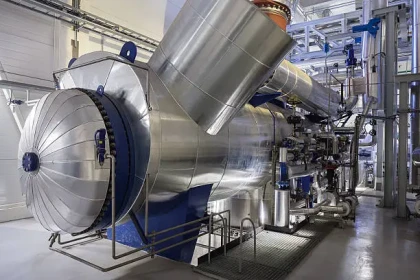
Heat rejection and coolant servicing are easily overlooked in a small parking-area layout.
Study the Grid Connection
The available electrical service often sets the real upper bound for a charging location. Utility upgrade lead times, transformer capacity and demand charges can dominate project cost. Load management and staged expansion may improve the investment case, but only if their effect on waiting time is modeled. The power budget belongs in the original site concept.
Monitor Availability Honestly
An online status icon is not necessarily evidence that a driver can start and complete a paid session. Track successful starts, interrupted charging, payment errors and dispenser-level downtime. Service teams need remote diagnostics that lead to a field action. Reporting a precise uptime percentage is meaningful only when the calculation and exclusions are transparent.
The design review for a liquid cooled charging station should be supported by evidence tied to the delivered configuration. Request thermal-performance evidence and an accessible maintenance plan.
Design for Large Vehicles
A heavy vehicle needs room for turning, reversing and service access while connected. Port locations, cable weight and overhead clearances can rule out layouts that work for passenger cars. Safety planning must account for employees walking around parked trucks at night. Drivers should be able to connect without awkward handling or blocking another bay.
Readers comparing specifications can review information about liquid cooled charging station as context, then verify site-specific claims with drawings, tests and commercial terms.

















Komentar